Limnological Report
October 19.pdf
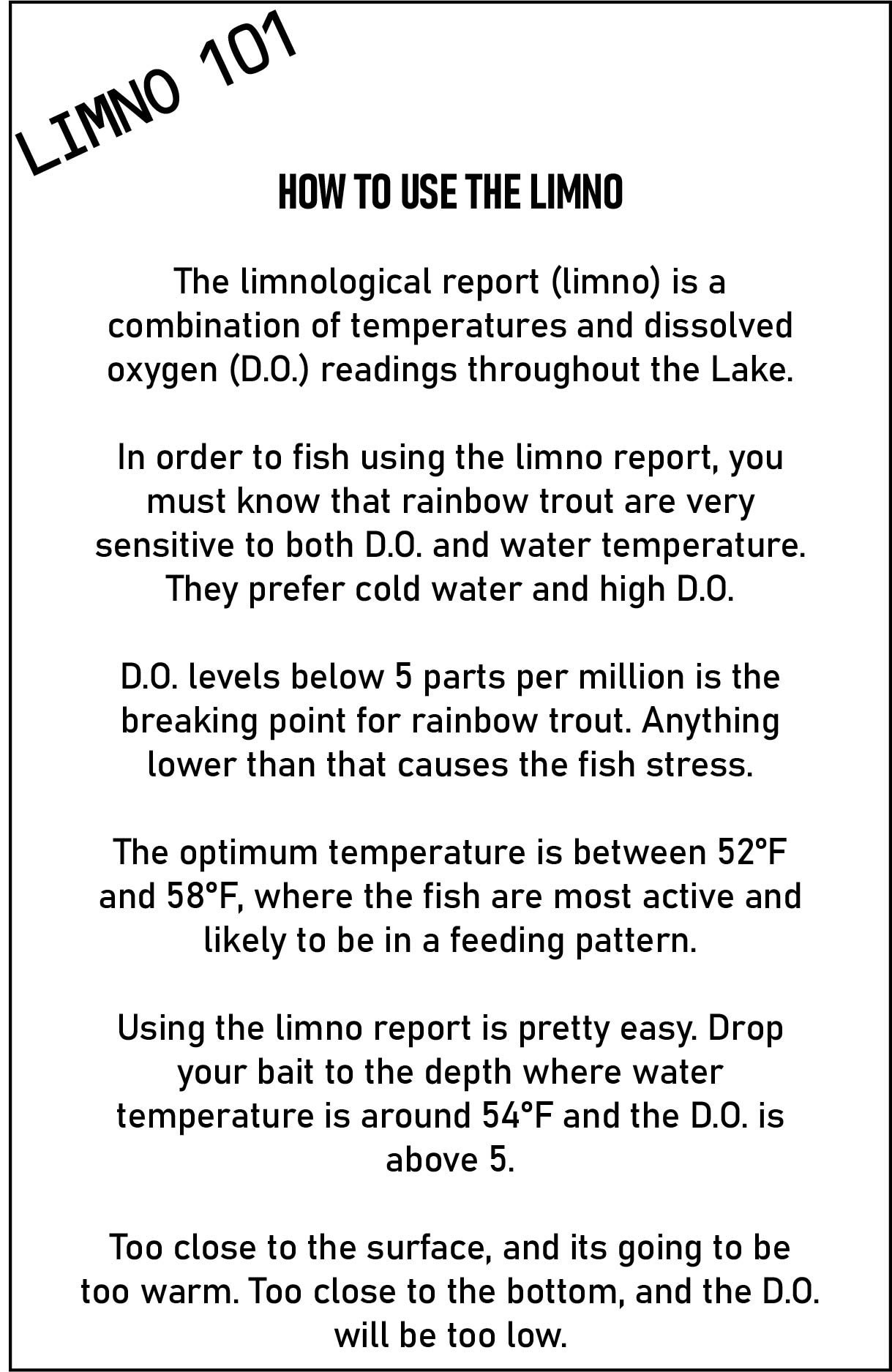
Limnology is the study of inland aquatic ecosystems. The study of limnology includes aspects of the biological, chemical, physical, and geological characteristics and functions of inland waters (running and standing waters, fresh and saline, natural or man-made). This includes the study of lakes, reservoirs, ponds, rivers, springs, streams, wetlands, and groundwater. Limnology is closely related to aquatic ecology and hydrobiology, which study aquatic organisms and their interactions with the abiotic (non-living) environment. The data presented here gives the District and the public a snap-shot of the health of Big Bear Lake’s water column by showing weekly measurements of the dissolved oxygen content and temperature of the water column, from the surface to the bottom of the lake at five equally distributed measurement stations across the lake.